
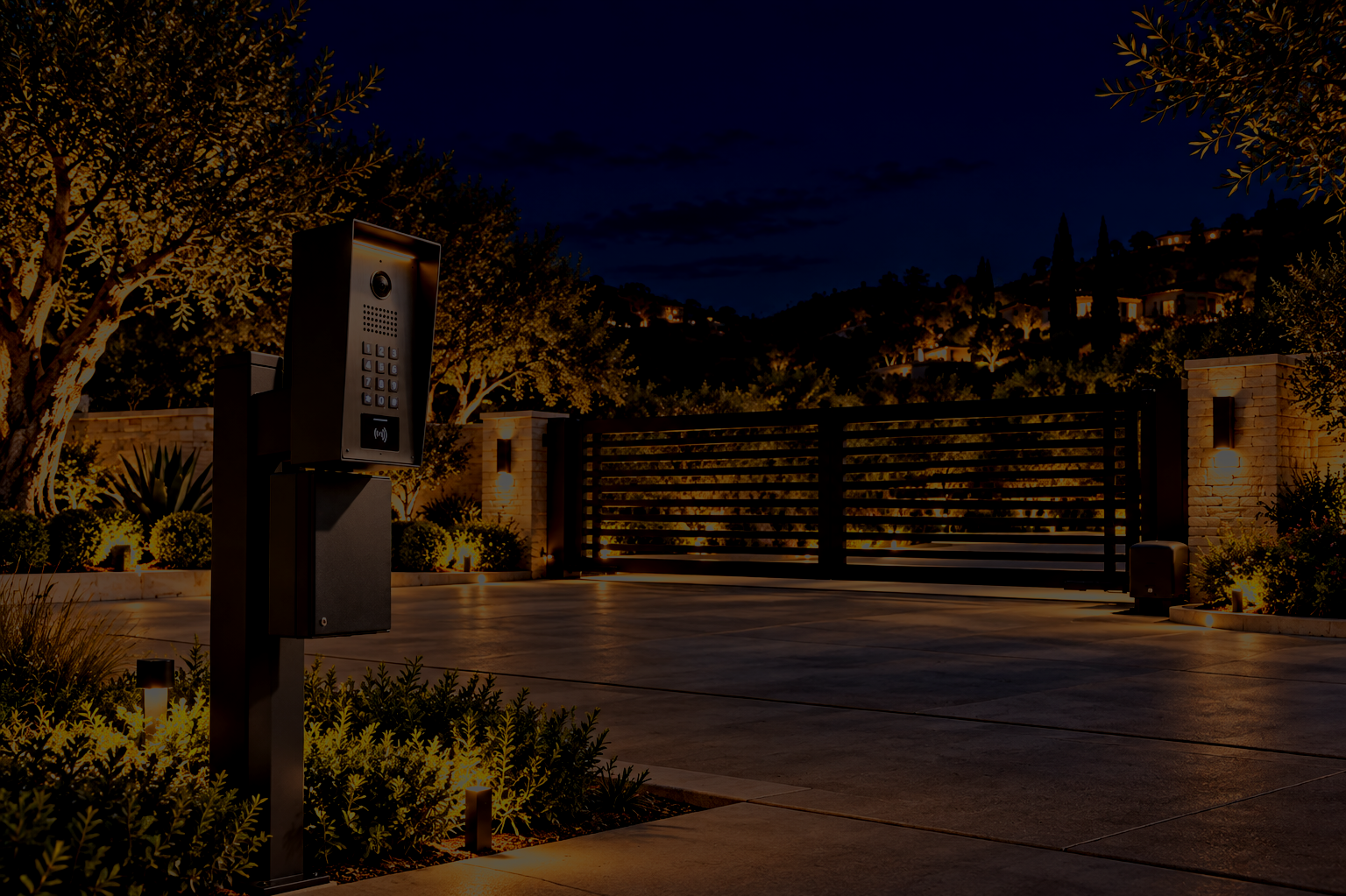
Gated Vehicle Access
Control Who Drives Onto the Property
A vehicle gate should do more than open and close.
It should create a controlled transition between the public side of the property and the secured side. Employees may need fast everyday access. Visitors may need authorization. Delivery drivers may need to contact someone before entering. Different vehicles may require different permissions. And the gate itself needs to work safely with the access-control system and the way traffic moves through the site. Veltek designs the security and access-control systems that manage those interactions.
Before the Gate Opens
Vehicle Access Starts Before the Gate Opens
A secure vehicle entrance begins on the unsecured approach side. The driver reaches the controlled entrance, the system determines whether they have permission to enter, and the gate opens only after the appropriate authorization occurs.
The authorization point belongs before the gate, on the unsecured side — where the driver can credential, request access, or communicate with personnel before entering the property.
Arrive
The driver reaches the controlled entrance and stops at the intended credentialing or communication point.
Authorize
The system verifies the credential, schedule, vehicle, or access request before the secured opening is released.
Enter
Once authorization is confirmed, the gate sequence allows the vehicle to move from the public side to the secured side.
The authorization method can be designed around the property and the vehicles using it:
Veltek selects the access method around the types of people and vehicles actually entering the property.
Part of the Access-Control Environment
Access Control at the Gate
Vehicle gates can become another controlled opening within the broader access-control environment. That gives administrators a more consistent way to manage vehicle access across the property.
Who Can Enter
Which Gate They Can Use
When Access Is Permitted
Credential Status
Access History
Temporary Permissions
Instead of treating the gate as an isolated piece of equipment, it becomes part of the same security strategy used across the property.
Access Based on the Driver
Different Drivers. Different Access Requirements.
Not every vehicle should be handled the same way. Access can be structured around who is arriving, why they are there, and when they should be allowed onto the property.
Employees
Provide convenient credentialed access based on the employee’s permissions and schedule.
Vendors & Contractors
Limit access based on approved times, entrances, or operational requirements.
Delivery Drivers
Provide a way to communicate with shipping, receiving, security, or facility personnel before entering.
Visitors
Allow temporary or remotely approved access without issuing permanent credentials.
Management & Authorized Personnel
Provide controlled access outside normal operating hours where appropriate.
Communication Before Entry
Intercom & Visitor Entry
Not everyone approaching a gate will have a credential.
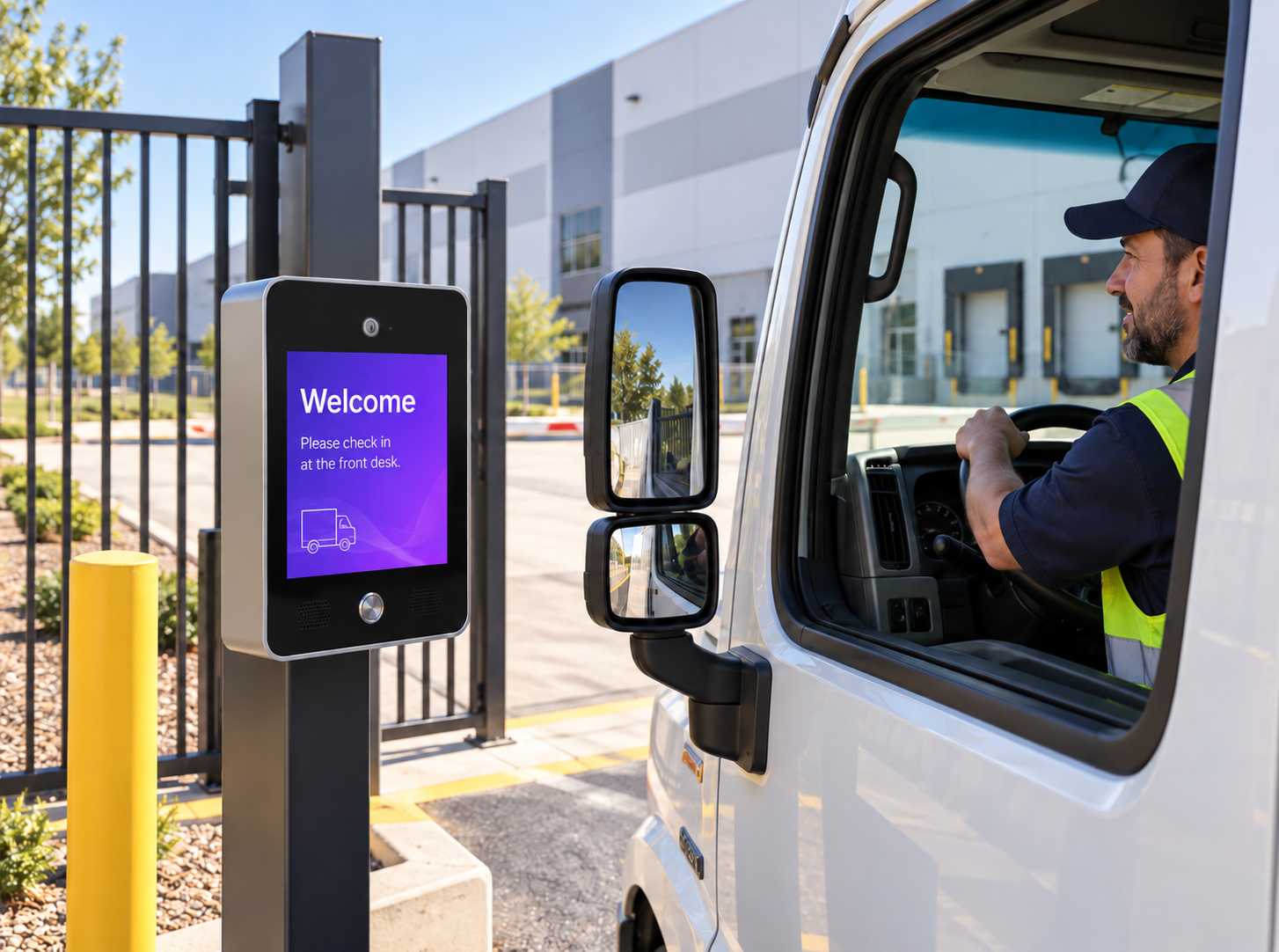
An intercom or telephone-entry system can allow drivers to request access from the unsecured side of the entrance. Employees can communicate with the driver, determine why they are there, and authorize entry when appropriate.
More Context at the Entrance
Video Verification
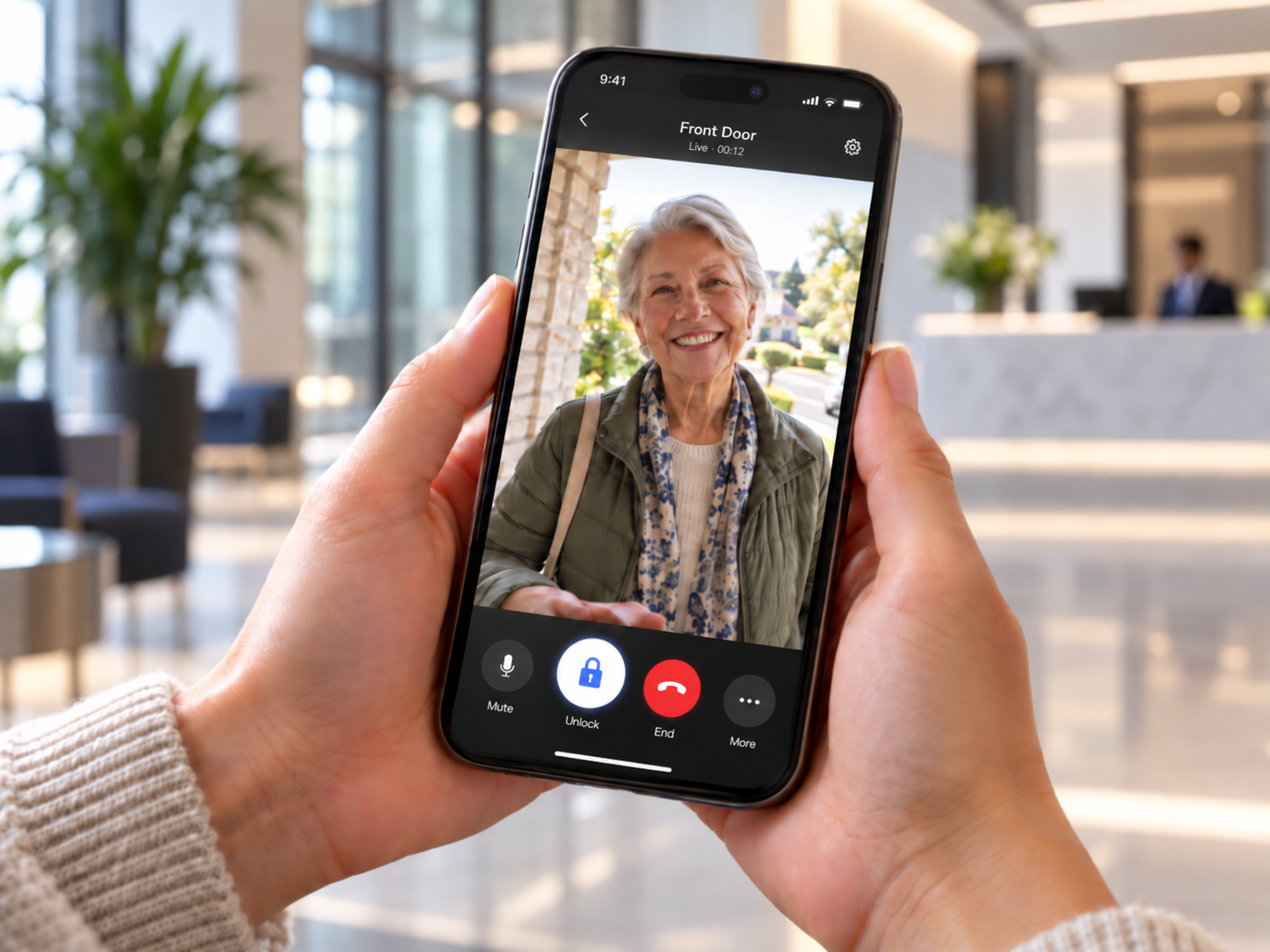
Cameras positioned around a gated entrance can provide additional context during an access event.
When appropriate, video can be designed alongside access control and intercom systems so personnel have more information when making an entry decision.
The Approach Matters
Designed Around Traffic Flow
A poorly designed vehicle entrance creates headaches quickly. The access-control system has to work with how drivers actually approach, stop, credential, communicate, and enter.
Veltek considers the actual vehicle approach, credentialing point, entry sequence, and operating procedures when designing the security portion of a gated entrance.
One Complete Entrance
Gate Operator Coordination
Veltek focuses on the security and access-control systems associated with the gate, including credentialing, intercoms, cameras, control interfaces, sequencing, and system commissioning.
When gate operators, vehicle barriers, safety devices, or other specialized gate hardware are required, we coordinate with qualified gate professionals so the complete entrance operates as one system.
The gate is only one part of the entrance. The entire access sequence needs to work.
Discuss a Gated Vehicle Access System
Evaluate the vehicle approach, authorization process, gate interfaces, intercom, video, credentialing, and operating sequence around the way your property actually handles vehicle entry.